 Business License

Analysis of Topology for High-Efficiency Bidirectional DC/DC Converters
A Bidirectional DC-DC Converter (BDC) is a type of DC-DC converter capable of facilitating bidirectional power flow. It is widely utilized in applications such as battery energy storage, electric vehicles, and data centers. This paper presents a detailed analysis of the topologies of several high-efficiency BDCs, along with a discussion of their operating principles, advantages, and disadvantages.
1. Bidirectional Buck/Boost Converter
The bidirectional Buck/Boost converter is a common topology for bidirectional DC-DC converters. It operates in both forward and reverse modes, making it suitable for applications requiring high efficiency and superior control performance. The operation principle is based on the energy storage and release characteristics of the inductor. By controlling the turn-on and turn-off of power switching devices (such as MOSFETs and IGBTs), bidirectional power transfer between two DC sources is achieved. In the forward mode, the converter operates as a Buck converter to perform the step-down function; in the reverse mode, it operates as a Boost converter to perform the step-up function.
2. Full-Bridge Bidirectional DC/DC Converter
The full-bridge bidirectional DC/DC converter utilizes a configuration of four diodes and four MOSFETs to achieve bidirectional rectification and inversion. It features high efficiency and excellent controllability. This topology is suitable for high-power applications, enabling efficient bidirectional power transfer. In the forward mode, the power switches are turned on and off with a specific duty cycle to convert the input DC voltage to the output DC voltage. Conversely, in the reverse mode, the control sequence is inverted to facilitate power flow in the opposite direction.
3. Isolated Bidirectional DC-DC Converter
The isolated bidirectional DC-DC converter incorporates a transformer to achieve galvanic isolation, enabling safer operation. Additionally, it can attain a high voltage conversion ratio by adjusting the transformer's turns ratio. This topology is widely used in applications such as electric vehicles and renewable energy systems. The transformer provides electrical isolation between the input and output, enhancing the system's safety and stability. Furthermore, it offers step-up and step-down voltage capabilities to meet the requirements of diverse application scenarios.
4. Synchronous Rectifier (SR)
The Synchronous Rectifier is a topology for non-isolated or isolated bidirectional DC-DC converters. It operates bidirectionally via synchronous rectification technology, offering the advantages of high efficiency and low cost. By utilizing power switching devices such as MOSFETs as rectifiers to replace traditional diode rectifiers, the SR reduces rectification losses and improves converter efficiency. Furthermore, it boasts fast response speed and high control precision.
5. Bidirectional Cuk Converter
The Cuk converter is a classic unidirectional converter. However, by adding anti-parallel diodes across the power switches and anti-parallel power switches across the diodes, a bidirectional Cuk converter can be constructed. This topology features three operating modes: forward transfer mode, reverse transfer mode, and alternating operation mode. It offers advantages such as a wide input voltage range and stable output voltage, making it suitable for applications requiring high efficiency and high control performance.
6. Novel Two-Stage Bidirectional DC-DC Converter
The novel two-stage bidirectional DC-DC converter consists of a symmetric LLC resonant converter in the front stage and a Buck/Boost converter in the rear stage. Equivalent circuit analysis is conducted using the Fundamental Harmonic Approximation (FHA) method. This configuration features high efficiency and superior control performance. The front-stage LLC resonant converter achieves soft switching, reducing switching losses, while the rear-stage Buck/Boost converter handles the step-up and step-down voltage conversion. The combination of these two stages enables a wider input/output voltage range and higher efficiency.
7. A Novel Isolated Bidirectional DC-DC Converter
This novel isolated bidirectional DC-DC converter employs a unique topology and control strategy, effectively eliminating the voltage spike issues present in traditional designs. The converter comprises three functional blocks: Block 1, Block 2, and Block 3. Block 2 provides isolation between the input and output, while also offering a fixed-ratio step-up or step-down function. Zero Current Switching (ZCS) is achieved through resonant technology, reducing switching losses and enhancing both efficiency and power density. Additionally, the converter features high dynamic response and high reliability, making it suitable for applications such as battery pack and DC bus interfaces.
Conclusion
In summary, high-efficiency bidirectional DC-DC converters feature various topologies, each with its unique operating principle and application scenario. In practical applications, the appropriate topology must be selected based on specific requirements to achieve efficient bidirectional power transfer.
Recently Posted
-
Bidirectional Energy Storage Inverter: The Key Technology for Efficient Energy Conversion
February 26, 2026As renewable energy becomes increasingly prevalent, the efficient and stable utilization of these resou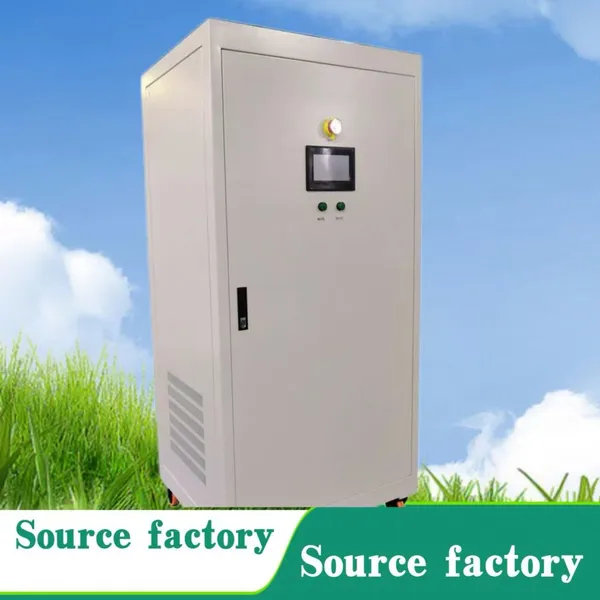 Read More
 -
Title: Understanding Industrial Frequency Off-Grid Inverters: A Compact Guide
October 11, 2025In today’s world, where energy independence and reliability are more important than ever, off-grid power systems play a crucial ro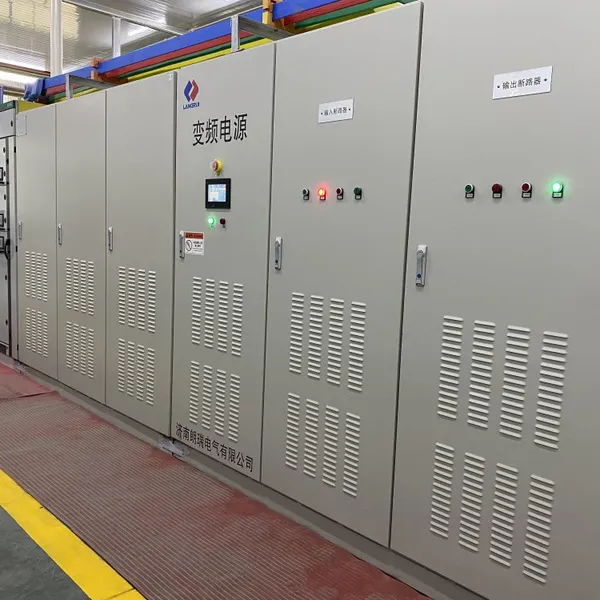 Read More

Contact Us
Recommended Products
-
 Custom 100kW/215kWh Liquid-Cooled C&I Energy Storage Battery Cabinet SystemUS$ 555 - 777MOQ: 1 Unit
 -
Solar Power Generation System - Commercial and Industrial All-in-one Solution for Energy Storage, Off-grid PV Inverter and Generator EquipmentUS$ 555 - 777MOQ: 1 Piece
-
Grid-tied Inverter, Three-phase Grid-connected Power Supply, Wind and Hydro Power Generation, 150KW/400KW/500KWUS$ 555 - 777MOQ: 1 Combo
-
Water Flow River Power Generation Grid-connected Converter Inverter 50KW With Generator Power Curve Settings (Available in Stock)US$ 555 - 777MOQ: 1 Combo
-
Variable Frequency Power Supply, 3KVA-3000KVA Product Factory Test Power Supply With Customization SupportUS$ 555 - 777MOQ: 1 Piece
-
Variable Frequency Power Supply for Ship Repair and Building, 60HZ AC Voltage and Frequency Regulation 300K/1000K/3000K Shore Power SupplyUS$ 555 - 777MOQ: 1 Piece
-
Three-phase/Single-phase AC Variable Frequency Power Supply, With Stable and Adjustable Voltage & Frequency, No Partial Discharge LB33-100KUS$ 555 - 777MOQ: 1 Piece
-
Pure Sine Wave Off-Grid Inverter for Solar, Hydro and Wind Power Generation - Three Phase, Single Phase, Two Phase CustomizableUS$ 555 - 777MOQ: 1 Piece
-
Variable Frequency Test Power Supply, Import and Export Equipment Simulation Voltage and Frequency Test Power Supply 100kUS$ 555 - 777MOQ: 1 Piece
-
Bidirectional Energy Storage Inverter Converter, 50KW Peak Shaving and Valley Filling, Grid DispatchingUS$ 555 - 777MOQ: 1 Combo